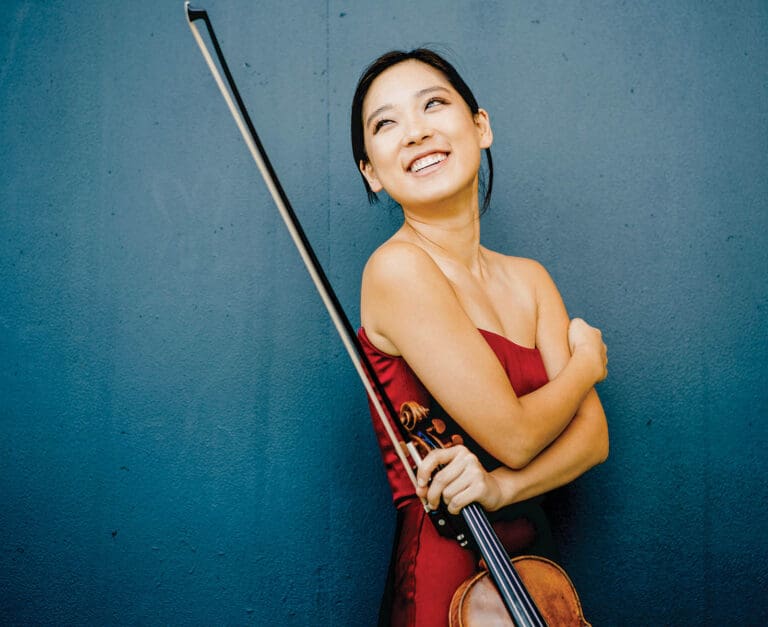

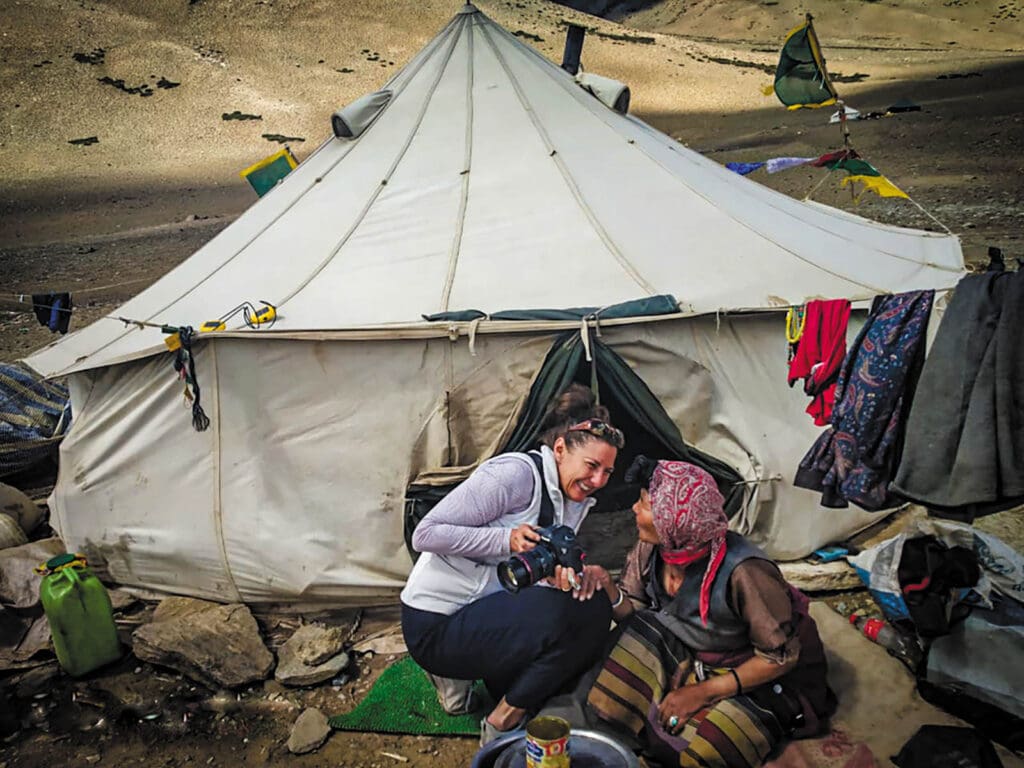
Distinguished social scientist and photographer Jennifer Fish is thinking and acting locally and globally
By Betsy DiJulio
Many of us start out running away from something before we learn what we are running toward. As a young woman in small town Ohio, Jennifer Fish wanted to “see the world.” She ended up changing it.

Fish, a distinguished social scientist with a research focus on migration, women’s labor and human rights, traces her life of service to the example of her Methodist grandparents.
“My grandfather would give people in our community lifts to church and then sleep through the sermon,” Fish recalls with a characteristic twinkle.
But she quickly adds that her grandparents would have never called their concern for others “service.” It was just what you did. And the same holds true for this photographer (whose work is featured here), Fulbright Scholar and professor of Women’s and Gender Studies at Old Dominion University for the last two decades.
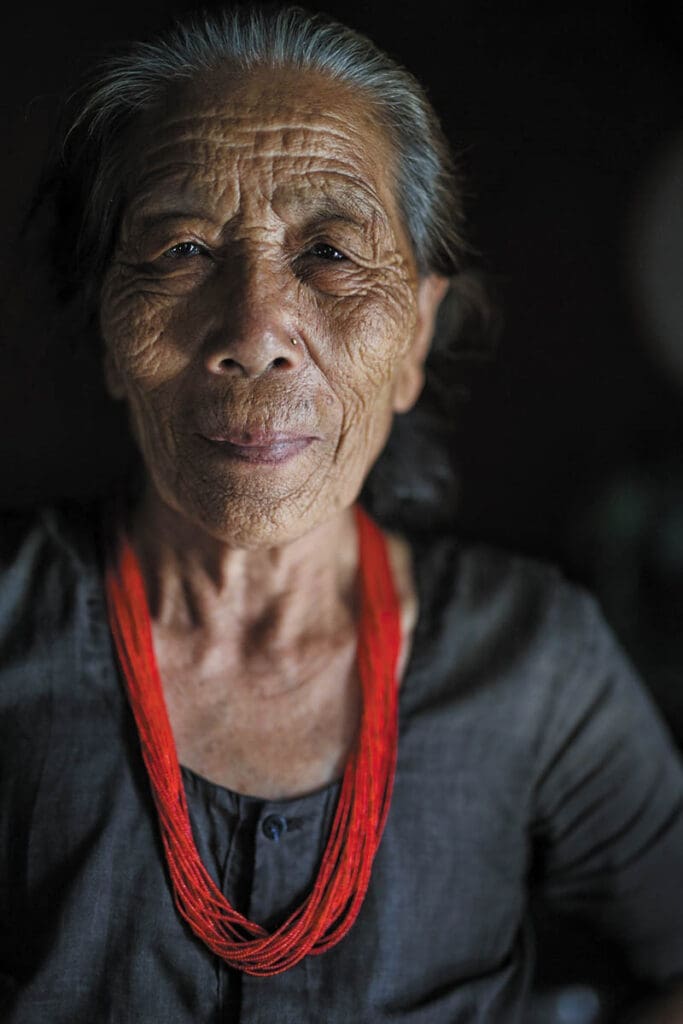
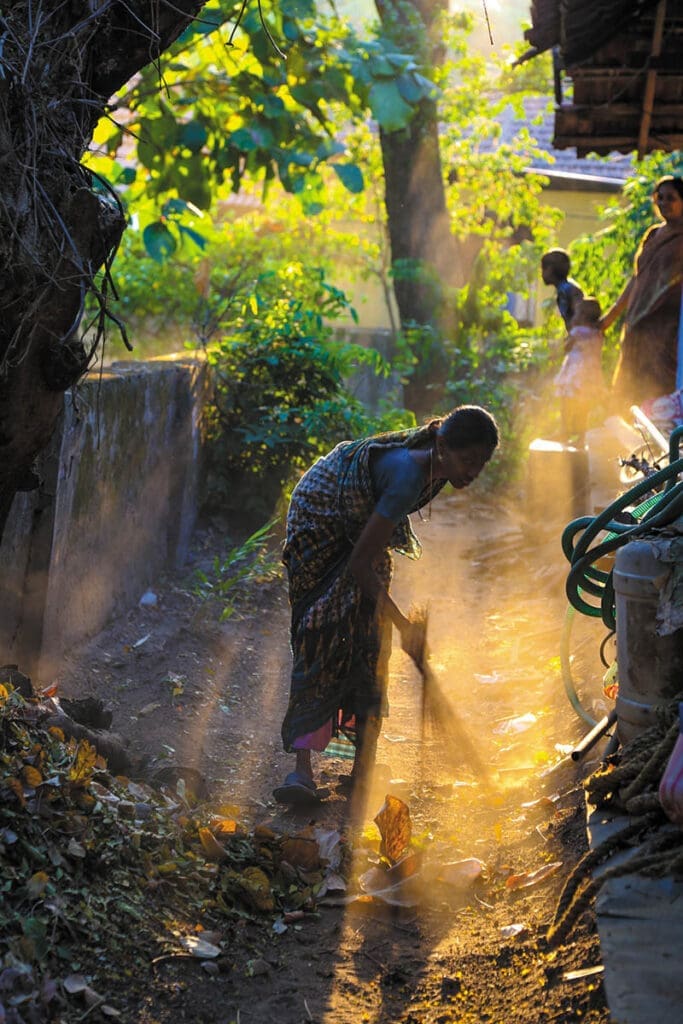

Fish’s advocacy for social justice at the grassroots, national and global levels in the same areas as her research can also be linked in some way to having “often felt like an outsider in the Midwest.”
Now, she is very much an insider, having led, for example, policy change research at the United Nations International Labor Organization in Geneva to support the development of the first set of protections for domestic workers worldwide.
Additionally, her ethnographic research has been used by international organizations, national governments, labor unions and universities worldwide. Her brand of “scholarship for social change” is grounded in the practices of deep immersion and contact theory.
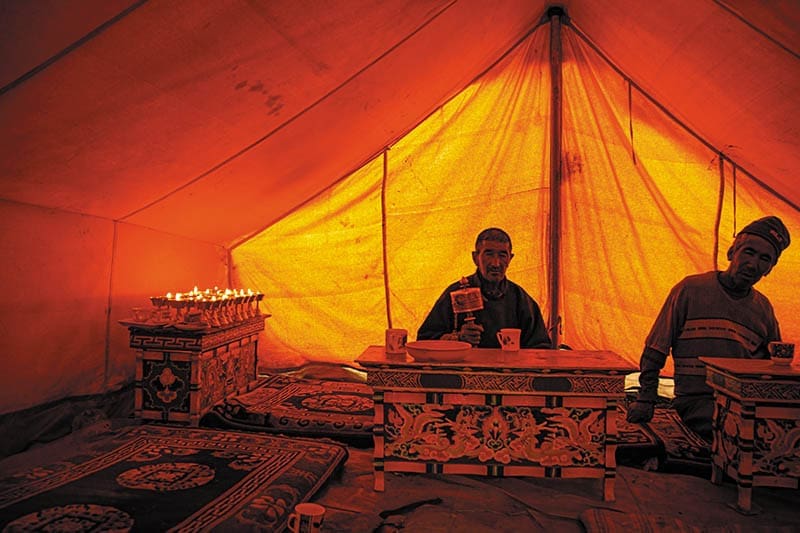
The former is a qualitative research method in which researchers—in this case, Fish, her graduate students and partner organizations—become deeply and personally involved in the everyday lives of their research participants, experiencing first-hand their challenges and triumphs.
Contact hypothesis is grounded in the belief that positive interactions between members of different social groups, what Fish refers to as “magical constellations,” challenge biases and stereotypes and thereby reduces prejudice and increases tolerance.
In 2012, Fish went to Rwanda with three graduate students to run a women’s studies conference, which she likens to “a petri dish of women’s representation in the public sphere” where all governance is essentially male.
They drove into a camp of 20,000 Congolese people who, because of tribal wars, could not return home and had been in this “human warehouse” for 20 years.
Fish returned two times with a graduate student who wrote her dissertation on the governance of camps within the larger international conflict while Fish began making images as “a way of understanding.”
Leaning into portraits and human stories, the often-blue school uniforms of the refugees juxtaposed against the red earth provided a visual resonance for “how terribly we’ve done.”
While there, she learned that the women would trade their food aid—a “bare minimum”—to try to build a trade. Subsequently, Fish has committed herself to projects like the Heartworks Story Project and Beloved Beadwork, which, as she writes, “reflect global solidarities, scholar-activist relationships and [her] wider connection to global artisans.”

Proceeds generated by these projects are invested in support of artists, migrant workers and refugees across the globe.
Back home, Fish asked, “What can I do in the U.S.?,” given that many of her students cannot afford to study three weeks abroad. This question led her to Commonwealth Catholic Charities (CCC), an agency that manages resettlement throughout the state, including in Newport News and Norfolk.
A community of several hundred Congolese refugees make their home in Newport News where Fish and her students would sit together on a rug in a family’s home, enjoying tea and meals served by the refugees.
“Human generosity is so compelling in the worst conditions,” she reflects of these deep immersion experiences. Since refugee assistance has, as Fish puts it, “ceased to exist until further notice” under the current administration, “we will focus efforts on long-term support of people already here.”

But, when COVID emerged as a global pandemic in 2020, Fish was asked by CCC to provide additional layers of support to a newly arrived woman named Suzana. Originally from the Democratic Republic of Congo, Suzana had migrated from a United Nations camp in Tanzania to Newport News with her four children, two pieces of luggage, and a folder of documents, leaving the rest of her family behind.
In 2021, during the height of the pandemic, Suzana became one of the 1% of the world’s 44 million refugees to legally resettle in another country. As Fish helped the family navigate their new life, the photographic narrative she began constructing tells a deeper story about the family’s transition—full of isolation, community, joy, struggle and resilience.
Entitled Threads of Strength & Struggle, her work was recently shown in Perrel Gallery at Norfolk Academy under the rubric, “What She Wore What She Bore.” Its centerpiece was a stunning, metaphorical dress co-designed with Shabani Lubula, a 26-year-old Congolese tailor also in Newport News, and sewn from fabric printed with Fish’s photos.
In 2022, she initiated Virginia’s first chapter of Every Campus a Refuge. Continuing her research and service-learning projects with refugees living in Africa and Coastal Virginia, she built a resettlement network within ODU including the Office of Housing and Residence Life, the Center for Global Engagement, the Women’s Studies Department, the English Language Center, the Graduate Program in International Studies and the Office of Intercultural Relations.
The alliance supports refugees as they rebuild their lives through the resettlement efforts of the local CCC affiliate.

Fish recalls that, also during COVID, “I took so many classes,” studying with, among others, Sarah Leen, the first female director of photography at National Geographic Magazine, and Eric Miller, a South African photographer driven by the injustices of apartheid.
From Miller she learned to “stop trying to get the whole story” and, instead, tell it symbolically. From Leen, the message was similar: “I want more poem. You’re a lot of literal.”
As Fish finds herself “turning toward art” with greater intensity, she is eager to see where it will take her on her social justice journey. If her path thus far, including five books, is any indication, it will be ever deeper into the world of vulnerable, resilient women.
These are women who might be described as “at the margins,” except that they and their work in the “informal economy”—not to mention their work in collective activism and social change—are at the very heart of societies worldwide.
All photos by Jennifer Fish. Learn more at jennifernataliefish.com.

Betsy DiJulio
Betsy DiJulio is a full-time art teacher, artist and curator with side hustles as a freelance writer, including for Coastal Virginia Magazine, and a vegan recipe developer, food stylist and photographer. Learn more on her website thebloomingplatter.com.