
BAY CAULKING & WATERPROOFING OWNER MARK JENKINS OFFERS SUMMERTIME HOME ADVICE
By Butch Maier
Bay Caulking & Waterproofing, based in Chesapeake, provides commercial home services including joint sealants, waterproofing, and air/vapor barriers. Owner and Vice President Mark Jenkins chatted by phone about summer home tips.

Coastal Virginia Magazine: What do readers need to know about Coastal Virginia homes this summer?
Mark Jenkins: “The old adage used to be you close your vents in the wintertime and open them up in the summertime. It might be OK in some climates, but in the southern climates, it’s really humid in the summer. I am a firm believer in closing your vents in the summer and opening your vents in the winter. Because in the summertime, air wants to go from warmer to cooler, and when it goes from warmer to cooler, it’ll hit its dew point, which means that’s when it turns to moisture, so I think—especially if you have large vents—that warm, moist air wants to come in. All that moisture, all that humid air can basically get stuck in the insulation and floor joists.”
CVM: So, is this a counter perspective?
Jenkins: “Most people around here probably agree with me. I know there are probably some older people who disagree and want to open their vents in the summertime. But with advances in technology and the more available knowledge about these things, more people seem to be getting on board with this.”
CVM: Tell me about the need for a solid vapor barrier. What needs to happen for that?
Jenkins: “Vapor barriers, as far as under a house, the way it used to be is for hundreds of years, nobody put anything under their house.”
CVM: And just crossed their fingers and hoped everything would be OK?
Jenkins: “Well, they just didn’t know enough about the science behind why you should use it. And, unfortunately, there are a lot of builders—residentially, anyway—that will use products that aren’t going to last very long. They’ll just throw some 6- or 8-millimeter poly [polyethylene] that’s not thick enough….A really good polyethylene plastic will prevent moisture from seeping from the ground and going up into your floor joist and your subflooring…Every location is different. Every house is different. So, it kind of depends on the needs of the customer.”
CVM: What are some of the factors?
Jenkins: “The soil is a big thing. Especially being here and near sea level. And with groundwater being such an issue. You’re constantly worried about mold, mildew. That’s why I always have leaned on a thicker, minimum 10-millimeter vapor barrier….For a vapor barrier to work properly, you want all your seams taped around your piers and on the foundation to fully make sure there’s no vapor coming up from the ground and getting into your substructure. Because, again, moisture, mold gets in there, it affects the air quality of the house.”
CVM: What about caulking?
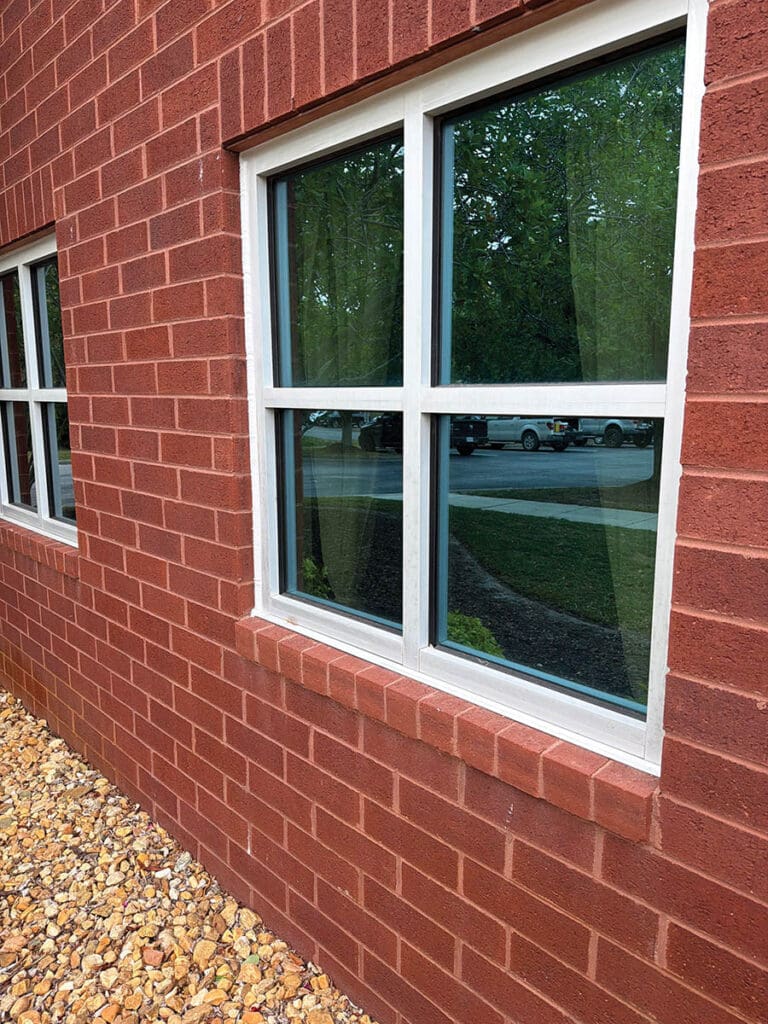
Jenkins: “It’s very similar with caulking. Because a lot of people—especially a lot of homeowners—don’t realize the importance of having a good seal around your windows and doors for the same reason. One, it’s the first line of defense against any leaks around your openings. Two, any cracks or old caulking, or caulking that wasn’t installed properly, is a similar situation. Especially in the summertime, that moist air, that vapor wants to go through, and once it goes through, that dew point usually is right there at your sheathing, and again you’re talking mold and mildew.”
CVM: If this is so important, why don’t more homeowners take care of this?
Jenkins: “We don’t do as much residential work as we would like because homeowners typically get sticker shock because they look at the price. They’re used to having a handyman or a painter come in with a product that’s not going to last nearly as long as our products are. We typically recommend using a commercial-grade silicone product on the windows and doors.”
CVM: What does a handyperson use?
Jenkins: “They might use a latex which, in my humble opinion of caulking for 30 years, you really shouldn’t use latex on the exterior. Just because it breaks down because it’s a water-based product.”
CVM: Any other tips?
Jenkins: “If you’re in the market to have a home built, although you’ll never see it and it is an expense, I would recommend putting a quality air barrier on your home prior to whatever cladding you are putting on—be it brick, vinyl siding, HardiePlank, stucco, whatever. I am a firm believer. The proof’s in the puddin’. It is an added expense. And a lot of homeowners hesitate. Let’s say the air barrier on the house is gonna be $35,000. And they’re thinking, ‘Well, that $35,000 would look good in my backyard as a pool.’ But over the lifespan of that house, you’re going to notice a tremendous savings in your energy bills, the quality of your air, probably oftentimes the longevity of your heating and air-conditioning units. So, yeah, I’m a firm believer in that. And if you have an existing house, have the vapor barrier under your crawlspace checked.”
For more information about Bay Caulking & Waterproofing, call Mark Jenkins at 757-771-3521.

Butch Maier