Virginia Beach-based grower cultivates around 2,000 exotic and rare fruits species in his backyard and greenhouse—including his namesake hybrid
What’s the most interesting fruit you’ve ever eaten? A juicy mango? Perhaps the faintly sweet dragonfruit? To many of us, these are the most unique fruits we’ve come across so far in our lives, but they just scratch the surface.

More than 2,000 fruit species are scattered around the globe; those filled with magical and sometimes unusual colors, fragrances, flavors and textures most of us would be shocked to know even existed.
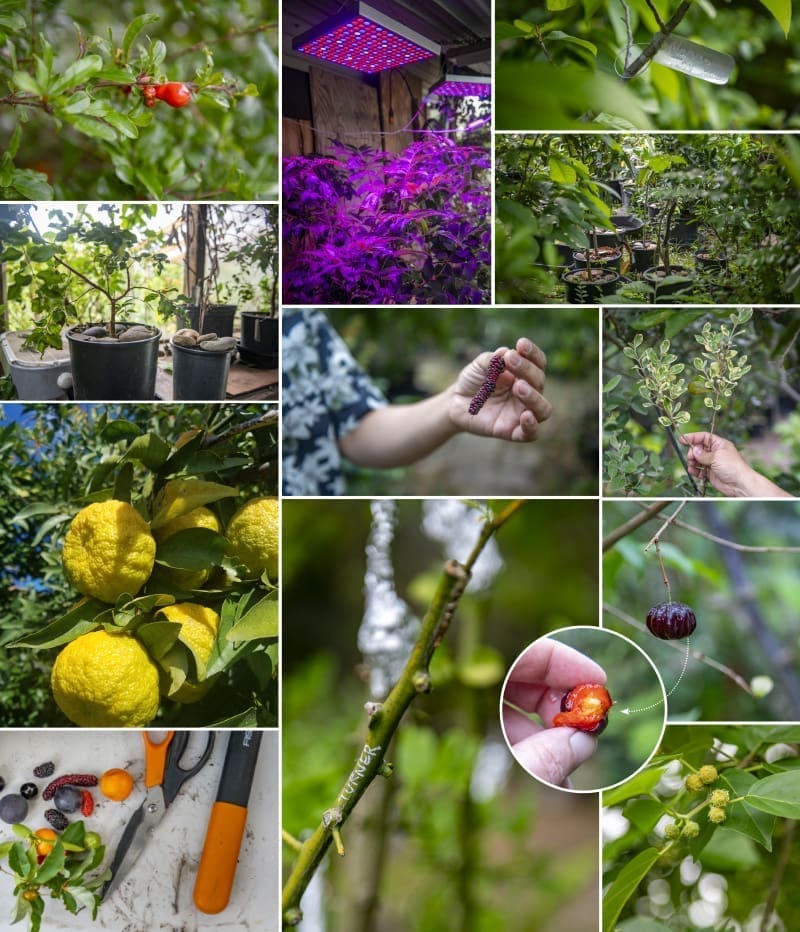
It’s a world that fascinates Gaylord Ventura of Virginia Beach. Ventura has been exploring and collecting fruits—most of which are rare—for years. He cares for a couple thousand fruit plants ranging from aromatic sweet wampee to peculiar-looking spider berries.
“It’s messy,” he says of the vast collection that is scattered throughout his backyard and greenhouse.“Even one person can hardly walk through the greenhouse.”
Ventura has a particular interest in citrus and jaboticaba—also known as the Brazilian grape tree, The latter can sometimes take up to a decade before fruiting.
“They’re easy to grow. If you have patience, they’ll end up fruiting but they take a while,” he says. “They’re just beautiful trees.”
The allure of these fruits isn’t just their outward appearance. It’s their intriguing tastes. One of Ventura’s favorite flavors is achacha, a fruit native to Bolivia’s Amazon basin.
“It’s a small orange fruit about the size of a golf ball,” he says. “When you crack it open with your teeth it pops open into a cottony white flesh.” The taste is a pleasant fusion of sweet and tart.
Although he is surrounded by rare plants from all over the world, one of this fruit grower’s proudest achievements has its origins right here at home.
The Ventura Lemandarin was a creation born in its namesake’s yard 21 years ago. The fruit is likely a citrus taiwanica and keraji mandarin hybrid.
“It happened naturally,” he explains. “I didn’t do it intentionally.”
Ventura planted the vigorous seedling—discovered in a community seedling pot he had—in his yard where it quickly grew and formed a fruit with a flavor reminiscent of lemonade with a dash of orange juice.
The plant has become somewhat of a celebrity, especially in Europe. In fact, Ventura gave some seeds to a friend in Ukraine where the Ventura Lemandarin was grown and established at Nikitsky Botanical Gardens.
Ventura grew up surrounded by the wonders of gardening, but it wasn’t until moving into his own house that his fruit journey truly took off.
He started with a few basic fruits and vegetables, but one day in 2003 he came across an ad for citrus trees that were grown by a resident in the city’s Alanton neighborhood. Curious, Ventura reached out.
“In his yard he grew enormous citrus trees,” he remembers. “I was so surprised they grew here.”
He soon gained a citrus mentor and began experimenting with rare citrus. But Ventura eventually found himself looking for more of a challenge.
“I wanted to move on to other stuff…and push the zone boundaries,” he says.
Hence, the tropical fruit passion began. Over the years, Ventura’s collection has significantly grown thanks to travels around the U.S. or from friends.
“I would take trips, sometimes for work meetings, to Florida and California, and explore nurseries and see what possibly could grow in a pot [or] bring indoors,” he says.
Many times, he would stuff fruit trees into his luggage to bring back home.
“I got a lot of my collection like that,” he laughs.
Some of Ventura’s jaboticaba were from a local friend who opened a fruit farm in Puerto Rico and brought him some seeds about 15 years ago.
Although most are tropical plants, they aren’t necessarily as problematic to grow here as one might think. While they still need plenty of attention and care, like watering, grafting, fertilizing and pruning, they often lack insect problems which can encourage better growth.
“Pests that normally bother them in the tropics just aren’t here,” he says.
Squirrels and rats can be a nemesis, however. Ventura traps and relocates them to help alleviate the issue. After decades of collecting, this fruit enthusiast believes he is almost fully satisfied with his plant assortment.
“I finally feel like I’ve almost completed my collection,” he says. “There’s one or two more things I want.”
This includes kwai muk, a small round fruit native to southern China that features tangy apricot and citrus notes. But despite potentially winding down, it’s still a journey and interest that will never get old for Ventura. One that continues to captivate him as much as it did when he first started.
“It’s still exciting even 2,000 trees later.”
Learn more on Instagram @virginiafruitgrower.
Photos by Leona Baker
Rachel Kester